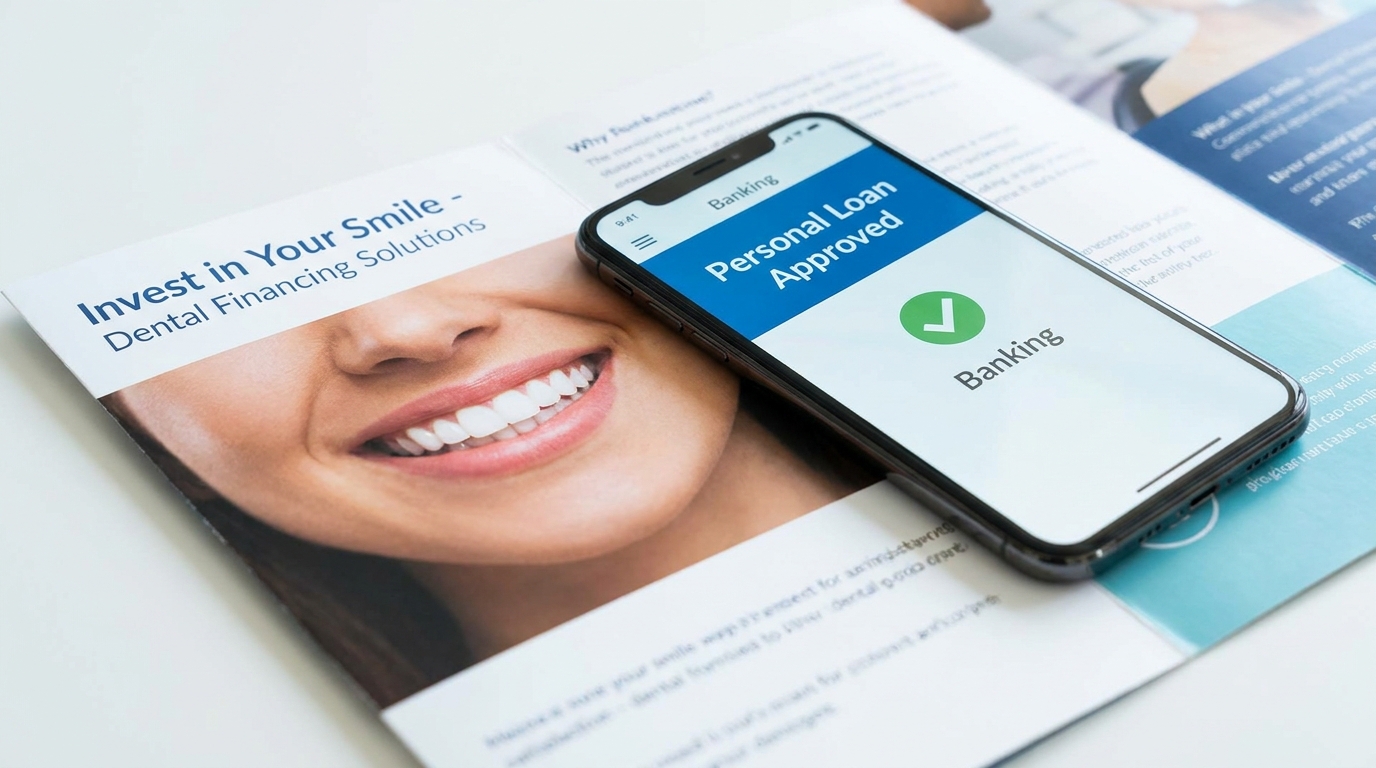
As a Personal Finance Advisor specializing in healthcare debt, I regularly consult with patients facing a massive financial hurdle: the cost of full-arch dental restorations. When facing $25,000 to $50,000 for “All-on-4” dental implants, the sticker shock is overwhelming.
Patients sitting in the dental coordinator’s office are usually handed a brochure for an in-house medical credit card. While these cards serve a purpose, they are rarely the most financially prudent way to borrow tens of thousands of dollars. Instead, I frequently advise my clients to look outward and secure an unsecured personal loan.
If you are exploring borrowing money for dental surgery, here is your comprehensive guide to understanding how standard personal loans compare to dental office financing, current rates for 2026, and exactly what it takes to get approved.
Personal Loans vs. In-House Dental Financing
To make an educated decision, you must understand the mechanical difference between these two financing methods.
In-House Dental Financing (Medical Credit Cards):
Products like CareCredit are essentially revolving credit cards. Their major selling point is “promotional financing,” often promising 0% interest for 12 to 24 months. However, this is usually “deferred interest.” If you leave even one dollar on your balance when the promotional period expires, or if you miss a single payment, the bank retroactively applies interest to the original total amount from the day of your surgery. With standard purchase APRs sitting near 32.99% in 2026, a simple mistake adds thousands of dollars to your debt overnight.
Unsecured Personal Loans:
A personal loan for dental work operates as a standard installment loan. You apply with a bank or online lender, and upon approval, they deposit cash directly into your checking account. You then pay your oral surgeon exactly as a cash patient would. You repay the lender in fixed monthly installments over a set number of years. There are no deferred interest traps, no promotional periods that expire, and no surprise retroactive penalties.
2026 Interest Rates and Repayment Terms
When you take out an unsecured medical loan, the predictability of the math is your greatest asset.
Fixed Interest Rates:
Personal loans feature fixed interest rates, meaning your payment will never change for the life of the loan. In 2026, the average personal loan interest rate hovers around 12.27%. However, if you have excellent credit (a FICO score above 740), you can secure rates as low as 6% to 8%. Conversely, borrowers with fair credit may see rates climb between 25% and 35.99%.
Repayment Terms (36 to 60 Months):
When financing all on 4 dental implants, stretching out the payments is usually necessary to keep the monthly budget intact. Standard personal loans offer fixed repayment terms of 36 to 60 months (3 to 5 years). Without deferred interest expiration dates, you can comfortably choose a 60-month term knowing your exact costs on day one. Your 60th payment will be identical to your first.

The Best Personal Loans for Healthcare in 2026
If you decide to bypass the dental office’s financing, you need a lender that can fund high-balance procedures quickly. Two of the best personal loans for healthcare in the current market are SoFi and Upstart.
-
SoFi: SoFi is arguably the strongest option for borrowers with very good to excellent credit. They offer loan limits up to $100,000—critical if you require upper and lower full-arch restorations. SoFi also offers extended terms up to 84 months (7 years) and charges zero origination fees.
-
Upstart: If your credit score has taken a few hits, or if you have a “thin” credit file with limited borrowing history, Upstart is an excellent alternative. Upstart utilizes an AI underwriting model that looks beyond your FICO score, factoring in your education and employment history. They offer funding up to $75,000 with standard 36 or 60-month terms. Keep in mind, Upstart does charge an origination fee (ranging from 0% to 12%), which is deducted from your total loan proceeds.
Pro-Tip: Walking into your dental office with a funded personal loan makes you a “cash buyer.” Always ask your surgeon if they offer a 5% to 10% cash discount, which can instantly offset the interest you will pay to the online lender.
How Your Debt-to-Income (DTI) Ratio Dictates Approval
The biggest hurdle in securing a massive $30,000 to $50,000 loan is not just your credit score; it is your Debt-to-Income (DTI) ratio.
Your DTI is the percentage of your gross monthly income that goes toward paying your existing monthly debt obligations (mortgage, car loans, minimum credit card payments). When a lender evaluates you for an unsecured loan of this magnitude, they are terrified of over-leveraging your budget.
Most premium online lenders require a DTI below 36%, though some AI-driven platforms like Upstart may approve borrowers with a DTI up to 45% or 50% under the right circumstances. Before applying for a dental loan, lower your DTI. Pay off small credit cards to eliminate those monthly minimums from your credit report, and include all eligible household income on your application.
Ultimately, rebuilding your smile is one of the most important investments you will ever make in your physical and mental health. Take control of the financing process. Use soft-pull pre-qualification tools to check your rates with online lenders before you sit in the dental chair. By understanding the math, prioritizing fixed rates over deferred interest traps, and managing your DTI, you can safely fund your restorative surgery without jeopardizing your financial future.
Financial Disclaimer: The information provided in this article is strictly for educational and informational purposes and does not constitute formal financial, legal, or medical advice. Interest rates, loan terms, and approval requirements fluctuate and vary by lender based on individual creditworthiness. Always read the complete terms, conditions, and fee disclosures of any loan agreement before signing, and consult with a licensed financial advisor if you need assistance managing debt.