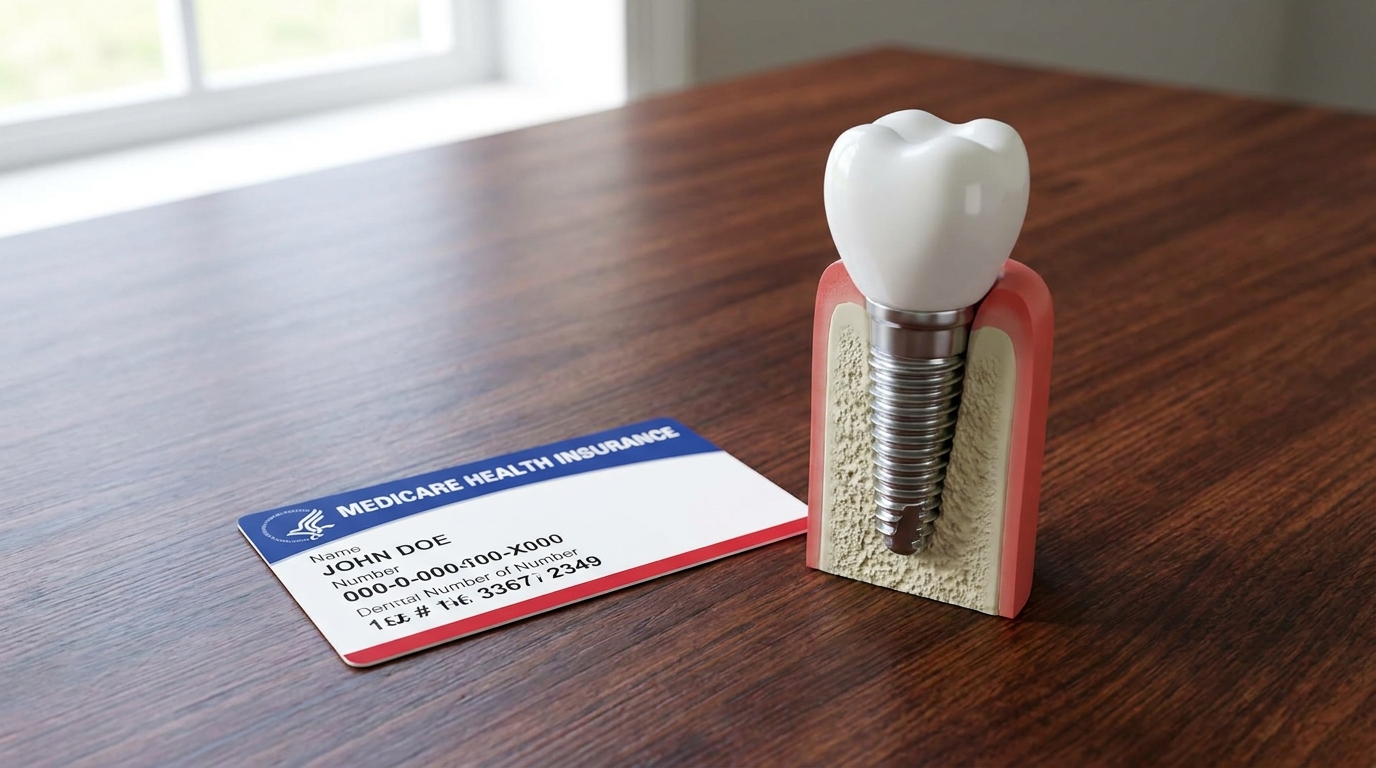
As a Medicare Policy Expert and Elder Care Advisor, one of the most heartbreaking conversations I regularly have with seniors revolves around dental care. A patient will successfully navigate a complex medical retirement, enroll in Medicare, and assume their healthcare needs are fully protected. Then, their dentist tells them they need a dental implant to replace a failing tooth so they can chew properly. They hand their red, white, and blue Medicare card to the receptionist, only to be told it will not cover a single dime of the $4,000 procedure.
The shock and frustration are entirely understandable. Your teeth are physically part of your body, so why does the federal government treat them differently than your heart or your lungs?
If you are currently wondering, “does medicare pay for dental implants?” you must understand the foundational laws governing federal healthcare, the rare medical exceptions that exist, and how private insurance gap-fillers actually work.
The Hard Truth: Original Medicare Dental Exclusions
When you enroll in the federal healthcare system at age 65, you receive Original Medicare, which is divided into two primary parts: Part A (Hospital Insurance) and Part B (Medical Insurance).
By law, under Section 1862(a)(12) of the Social Security Act, Original Medicare strictly excludes payment for “routine dental care.” This statutory language means that the federal government will absolutely not pay for:
-
Routine oral exams and cleanings.
-
Cavity fillings and root canals.
-
Tooth extractions (in most standard decay scenarios).
-
Dentures, dental plates, or bridges.
-
Dental implants (including the titanium post, the abutment, and the final porcelain crown).
These original medicare dental exclusions are absolute in the context of standard aging and decay. It does not matter if the missing tooth is causing you pain, making it difficult to eat, or impacting your mental health. Under standard Original Medicare rules, an implant is considered an elective dental expense, leaving you responsible for 100% of the cost.
The Narrow Exceptions: Medically Necessary Dental Surgery
While routine dental implants are excluded, the Centers for Medicare & Medicaid Services (CMS) has recently clarified and expanded rules regarding what happens when dental health directly threatens a medical procedure.
Original Medicare will step in to cover dental services if they are “inextricably linked, substantially related, and integral to the clinical success” of a covered medical treatment. This is what we refer to as medically necessary dental surgery.
Here are the specific, narrow scenarios where Medicare Parts A and B will cover dental work:
-
Organ Transplants and Cardiac Valve Replacements: If you need a new heart valve or an organ transplant, a severe oral infection could be fatal if it enters your bloodstream during surgery. Medicare will pay for a comprehensive dental exam and the necessary extractions to eliminate the infection prior to the surgery.
-
Head and Neck Cancer: If you require radiation for jaw or throat cancer, Medicare will cover tooth extractions to prepare your jaw for the radiation therapy. They will also cover treatments to address oral complications resulting from the cancer care.
-
Tumor Removal and Reconstruction: If you have a facial tumor removed, Medicare will cover dental ridge reconstruction performed at the same time to rebuild the structure of your jaw.
-
End-Stage Renal Disease (ESRD): Medicare now covers dental assessments and treatments to eliminate oral infections prior to, or during, dialysis treatments.
The Catch: Even if you qualify under one of these extreme medical exemptions, Medicare is only paying to eliminate the infection or stabilize your jaw. They will pay to pull the infected tooth, but they still will not pay for the titanium dental implant to replace the tooth once you recover.

The Alternative: Medicare Advantage Dental Coverage
Because Original Medicare leaves seniors so exposed to dental costs, millions of beneficiaries choose to enroll in Medicare Advantage (Part C). These are private health plans approved by Medicare that bundle your Part A, Part B, and usually Part D (prescription drug) coverage together.
To compete for your enrollment, these private insurers offer “extra” supplemental benefits that Original Medicare does not. Today, nearly 97% of Medicare Advantage enrollees have access to some form of medicare advantage dental coverage.
Some of these plans explicitly list dental implants as a covered benefit. However, as an advisor, I must warn you to read the fine print carefully. Medicare Advantage dental benefits come with strict limitations:
-
The Annual Benefit Maximum: This is the most critical hurdle. Even if your Medicare Advantage plan covers implants, they usually impose a strict annual maximum on what they will pay for dental care—typically between $1,000 and $2,500 per year. Because a single implant can cost $4,000, your plan will max out rapidly, leaving you to pay the balance out-of-pocket.
-
Network Restrictions: You must use a dentist or oral surgeon who is in the plan’s specific network (HMO or PPO). If you go to an out-of-network implant specialist, the plan may pay nothing.
-
Prior Authorization and Waiting Periods: Many plans require the dentist to submit X-rays and receive prior authorization before performing the surgery. Furthermore, if you are new to the plan, there may be a 6-to-12-month waiting period before major services like implants are covered.
Strategies for Senior Dental Financing
If you need a dental implant and realize that Original Medicare won’t cover it and your Medicare Advantage plan will only pay a fraction, how do you afford the care?
Navigating senior dental financing requires a strategic approach to piecing together coverage:
-
Maximize Your MA Allowance: If you have an MA plan with a $2,000 allowance, time your treatment wisely. You might have the implant post surgically placed in November (using your 2025 allowance) and have the final crown attached in January (using your new 2026 allowance).
-
Standalone Dental Insurance: You can purchase a private, standalone dental insurance policy. Be aware that these also carry annual maximums and waiting periods, so you must enroll well before you need the surgery.
-
Dental Savings Plans: These are discount membership clubs, not insurance. You pay a low annual fee and get access to a network of dentists who agree to offer their services at a 20% to 50% discount. Because there is no annual cap, these plans can save you thousands on multi-implant procedures.
-
CareCredit and Installment Loans: Medical credit cards or personal loans allow you to break the massive cost of an implant into manageable monthly payments. Just be cautious of deferred interest promotional periods; missing a payment can trigger massive retroactive interest charges.
The transition into Medicare requires a shift in how you view dental care. It is no longer a guaranteed medical right under federal law. By understanding the limitations of Original Medicare, strategically utilizing Medicare Advantage benefits, and exploring alternative financing, you can protect both your physical health and your retirement savings.
Legal and Financial Disclaimer: The information contained in this article is strictly for educational and informational purposes and does not constitute official Medicare guidance, financial advice, or medical recommendations. Medicare policies, coverage guidelines, and Medicare Advantage benefits are subject to change annually. Always verify specific coverage details with the Centers for Medicare & Medicaid Services (CMS), your plan administrator, or a licensed insurance broker before undergoing treatment.